

Feb
Knock, knock. Are you listening to the deep whisperings of nature? The wisdom of nature is offered to us all the time, but are we really aware of what is being offered? I call this the common sense approach to life. When the weather is cold, we put our jackets on. This is our instinctual approach to life.
As a child, I grew up in a household in Mumbai, India, where my family practiced all of the ancient principles of Ayurveda. I took this way of living for granted until I came to the United States and realized how lucky I was to have experienced and lived this lifestyle of wholeness and balance. I have been joyfully sharing my passion for Ayurveda wisdom through my cooking classes, spice blends, cookbook Turmeric and Spice: Indian Cuisine for the Mind, Body, and Spirit, and other teachings. I have infused my cookbook with my enthusiasm for the versatility of gourmet Indian food and my wisdom inherited from my lifestyle rooted in Ayurvedic philosophy and family traditions.
Ayurveda is rooted in the philosophical idea that everything in the world is composed of five elements: earth, water, fire, air, and space, called the Mahabhutas. The five elements combine themselves as triadic bio intelligent forces or doshas (kapha, pitta, vata) that create a foundation for our physical, mental, and spiritual world. The five elements form the world, all food on this planet, and our own bodies, and our food literally forms the physical body.
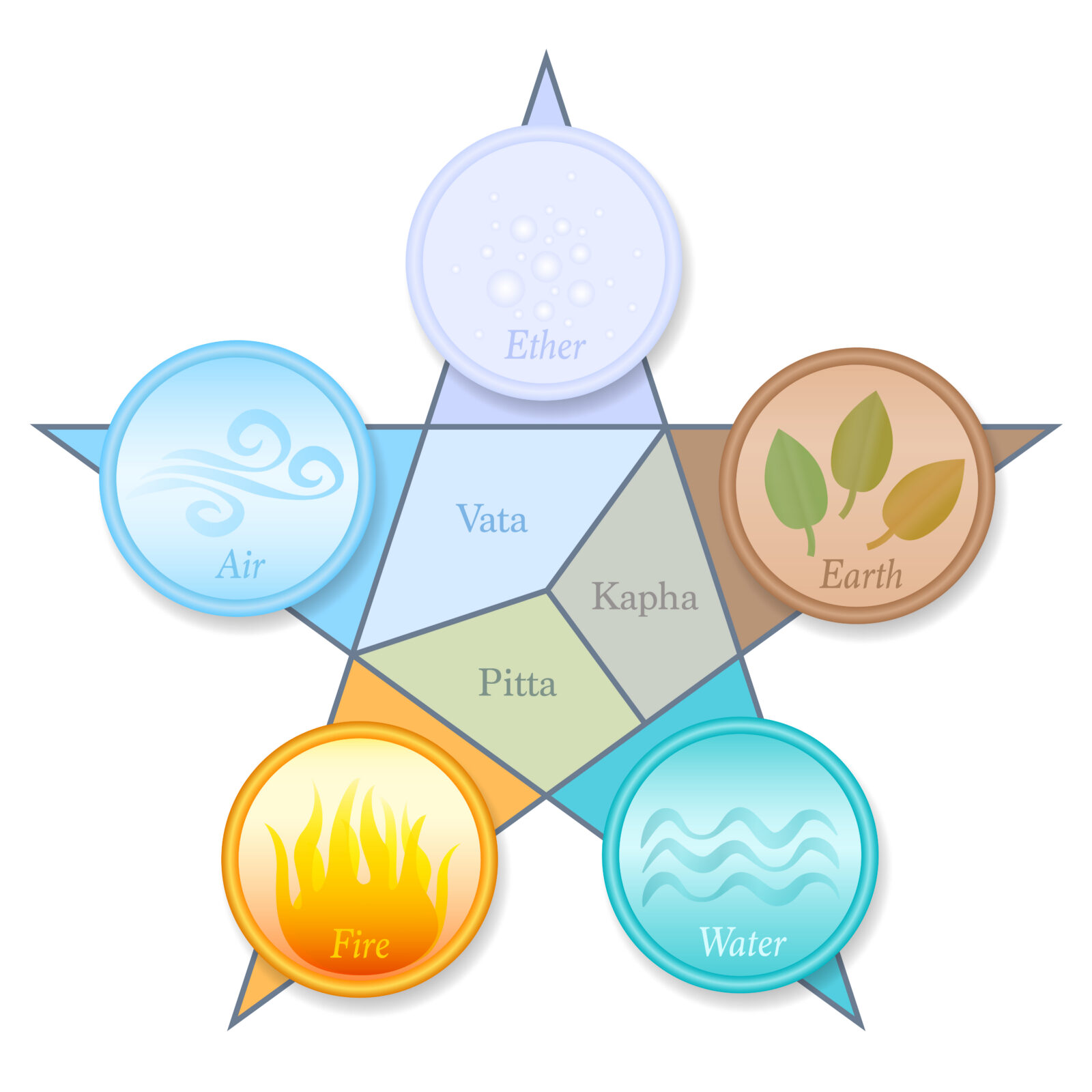

Through my everyday practice of Ayurveda and my formal study, I have learned that at its core, Ayurveda is about finding balance in your unique circumstances within a constantly changing environment. This practice includes awareness of the choices you make about your lifestyle, your diet, your relationships with friends, family, nature, the world, and the universe. More importantly, to find value, meaning, and joy in our lives is the ultimate goal.
According to Ayurveda, there are six seasons in the year: late winter (shishir), spring (vasant), summer (grishma), monsoon (varsha), autumn (sharad), early winter (hamant). The transition between each season is called ritusandhi (the threshold movement). These transitions can have a subtle effect on our body, psyche, and nervous system.
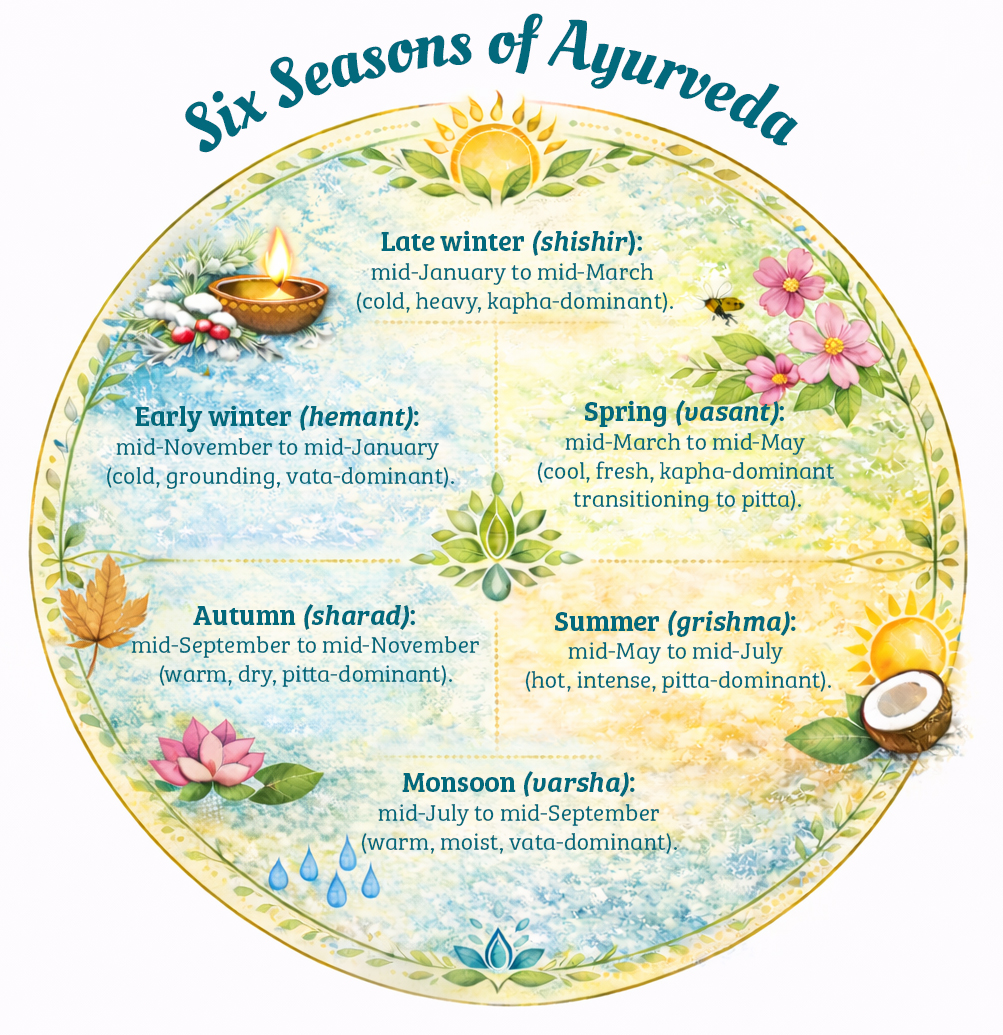
The vata-kapha transition (late winter into early spring) invites balance when the lightness and movement of vata give way to kapha’s moisture, density, and inertia. These two different textures of vata and kapha both carry the quality of coolness. But vata is cold, light, dry, rough, and catabolic, and kapha is heavy, cool, dense, wet, slow, and anabolic. When these two drift out of harmony, we feel both sluggish and anxious, foggy and restless. We can bring balance between these two doshas, vata and kapha, through what we eat during this transition.
To understand this further, vata is composed of two elements: ether and air. Kapha is composed of the elements earth and water. Ether and air are subtle elements which are unseen but felt. The elements of earth and water are tactile; we can feel them.
Ayurveda says there are 10 pairs of opposite qualities that exist in nature. In Ayurveda, everything is understood through these opposites, or gunas. The opposites are the language of balance. When something is excessive, we restore harmony by introducing its opposite. This is the quiet genius of Ayurveda living: simple, intuitive, and deeply practical.
Pairs of Opposites (gunas)
Cold and hot
Dry and oily
Heavy and liquid
Stable and mobile
Soft and hard
Clear and cloudy
Smooth and rough
Subtle and gross
Dull and sharp
Like increases like, and the opposite heals. It’s not about eliminating qualities; it’s about striking the right balance for your unique constitution to bring harmony. When your mind is in harmony, the sattva guna is present, versus when you have too much kapha, you are tamasic and have a dull mind and when you have too much vata, you are rajasic and have an anxious and erratic mind. The sattva guna brings about clarity, balance, and ease.
Vata is the wind (prana) that moves through us—subtle, creative, quick, and inspired. Kapha is the earth that holds us—steady, nurturing, calm, and enduring. When these two are in harmony, we are grounded and alive. When vata needs to be pacified when out of balance, we feel scattered and anxious. When kapha is out of balance, we feel stagnated and unmotivated.
To bring balance, we can eat certain foods and spices that gently and gradually ignite our agni (digestion), which helps us to assimilate and digest. To eat is human; to digest is divine. To soothe the dryness and anxiety of vata, embrace the grounding from the kapha dosha by eating foods cooked with ghee; warm, soups and stews and one-pot meals; warm, freshly-prepared foods; lightly spiced meals; kapha-reducing spices (ginger, black pepper, cumin, coriander, mustard seed); vata-calming spices, such as fennel and Aromatic Chai: saffron, cardamom, black pepper, ginger, nutmeg, etc. I recommend eating foods that are not complicated but simple and are in season where you live. I also recommend not over-eating.
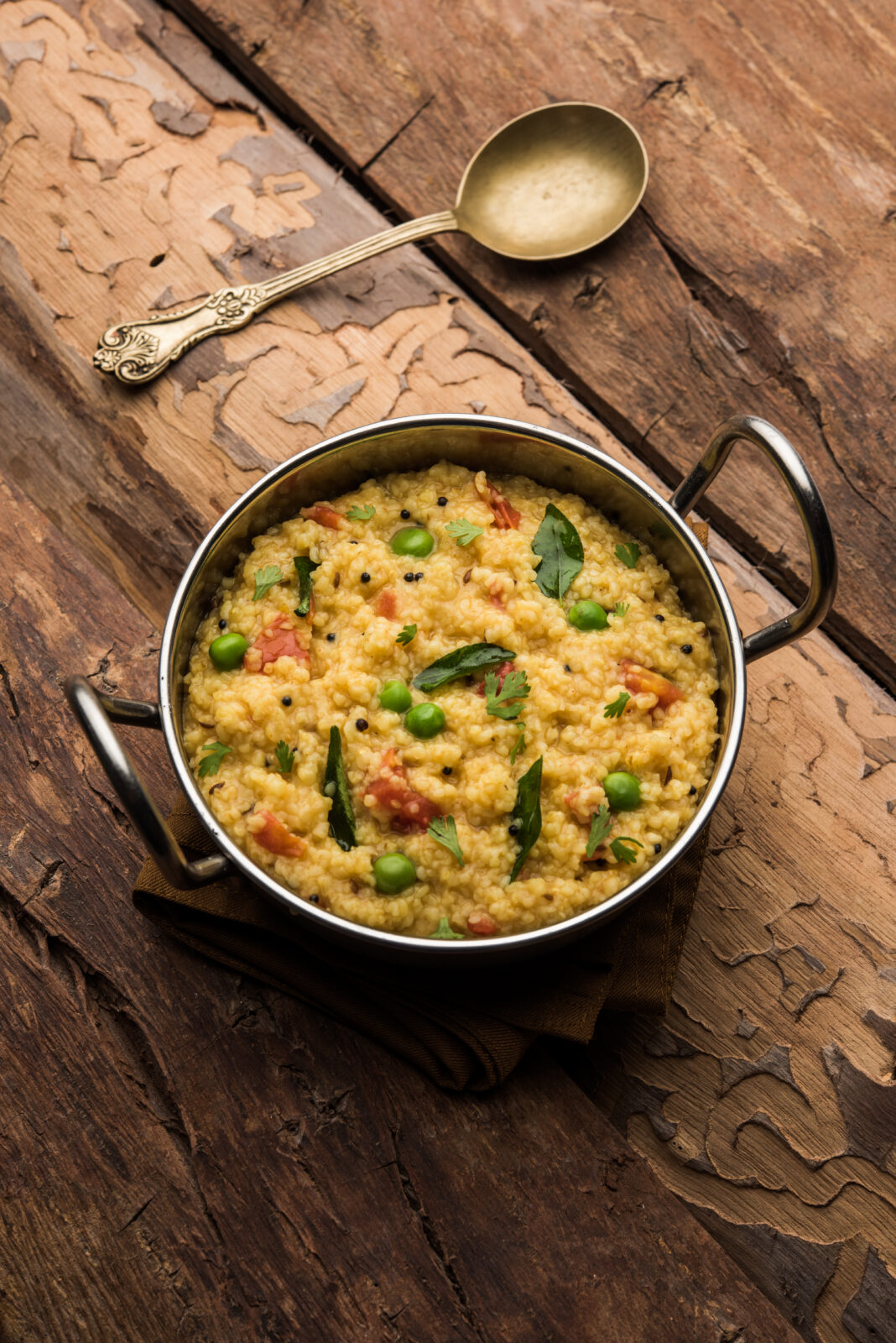
For cold, windy, damp days, Khichdi would be a nourishing, delicious, nurturing, simple, and light meal for balancing vata-kapha.
Vata–Kapha Khichdi
Khichdi is usually served with a yogurt soup called kadhi or plain yogurt.
• Basmati rice + mung dahl
• Seasonal vegetables
• Spices to ignite agni
• Finished with ghee
Ingredients
¾ cup basmati rice
¾ cup split mung dahl or split masoor dahl
¼ teaspoon salt
Pinch of baking soda
Enough water to cover rice and dahl for soaking
7 cups water (for pressure cooker or Instant Pot)
1 tablespoon freshly grated ginger
Salt to taste
1 tablespoon turmeric
½ teaspoon black pepper
½ teaspoon fennel seeds
1 small zucchini, small diced
2 cups fresh spinach or greens of your choice
1 cup fresh green beans, chopped
For tempering:
3-4 tablespoons ghee or oil of your choice
1 teaspoon whole cumin seeds
1 stick cinnamon
A pinch of hing
½ heaping teaspoon Bina’s Garam Masala
Rinse basmati rice and dahl together in a colander or strainer until water runs clear. Add basmati rice and dahl to a large bowl, add ¼ teaspoon salt and a pinch of baking soda. Soak basmati rice and dahl for 2 hours.
Mix all ingredients together (not the tempering ingredients) and put in a pressure cooker or Instant Pot. After the pressure cooker whistles, allow it to cook an additional 2-3 minutes, then turn off the pressure cooker and allow the pressure to settle. If using an Instant Pot, follow directions.
For tempering, be prepared to work quickly and have all ingredients measured out and ready to go. Heat ghee or your preferred oil in a small saucepan on high. Once the ghee is hot, add cumin seeds and cinnamon stick. When the cumin seeds pop, quickly add the hing, take the pan off the stove, and add the Garam Masala, then immediately add the mixture to the rice and dahl. The mixture should have a soft porridge-like consistency. Serve in bowls as a stew. Serves 4–5.
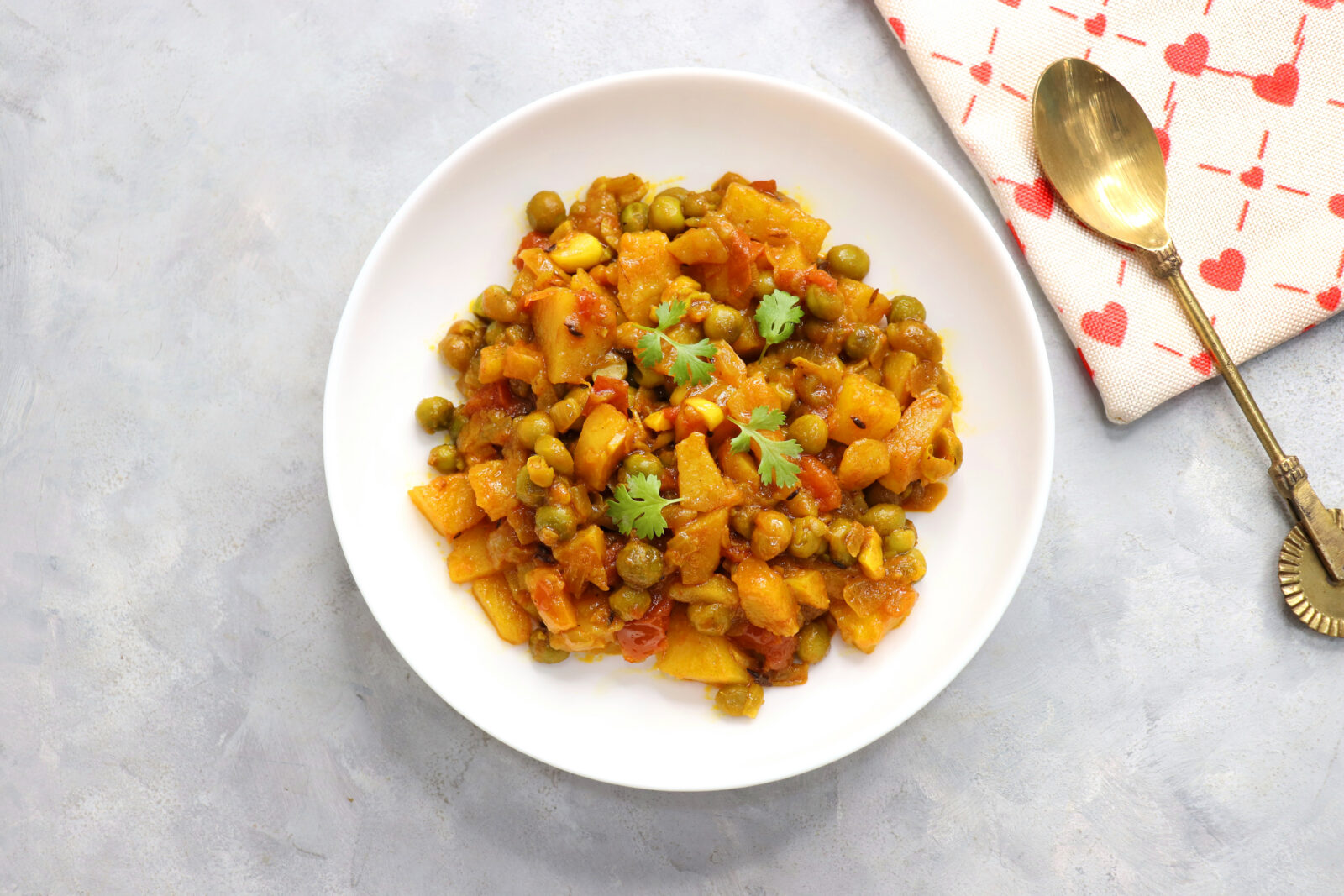
Potatoes, Tomatoes, and Peas is a versatile dairy-free “gravy” that can be served over khichdi. Add your favorite vegetables to it.
• Seasonal vegetables
• Spices to ignite agni
Ingredients
2 small potatoes, small diced
1 cup peas
1 bell pepper, chopped
1 small zucchini, small diced
2 cups cauliflower, cut into small florets
4 ripe tomatoes or a 16-ounce can diced tomatoes (I recommend San Marzano)
1 tablespoon salt or to taste
1 tablespoon turmeric
2 tablespoons coriander powder
1 tablespoon fresh mint, chopped
8–10 curry leaves
4 cups water
Fresh cilantro, chopped (for garnish)
Tempering Ingredients
2 tablespoons oil
1 teaspoon mustard seeds
Complete the tempering first. Be prepared to work quickly and have all ingredients measured out and ready to go. Heat ghee or your preferred oil in a medium or large Dutch oven on high. Once the ghee is hot, add the mustard seeds, and when they pop, add the tomatoes and allow the tomatoes to cook for 5–6 minutes until broken down.
Add all of the other ingredients to the Dutch oven, and mix thoroughly. Add 4 cups water to the mixture and stir. Cover and simmer for 15 minutes until the potatoes are tender. Serve over khichdi, and garnish with chopped cilantro.
Bina Mehta Spice Blends for Dosha Balancing
I call Indian spices nature’s kitchen pharmacy. Healing ourselves is as simple as opening our kitchen cabinet. We can take advantage of this resource by using powerful and potent herbs, spices, and superfoods within our own home. The kitchen can become your own clinic. You can use your kitchen and its resources to create herbal cures that will heal your family and yourself. The following are commonly available options that may already be in your home.
Many of the ingredients in my blends are whole spices that are roasted locally before grinding for optimum freshness.
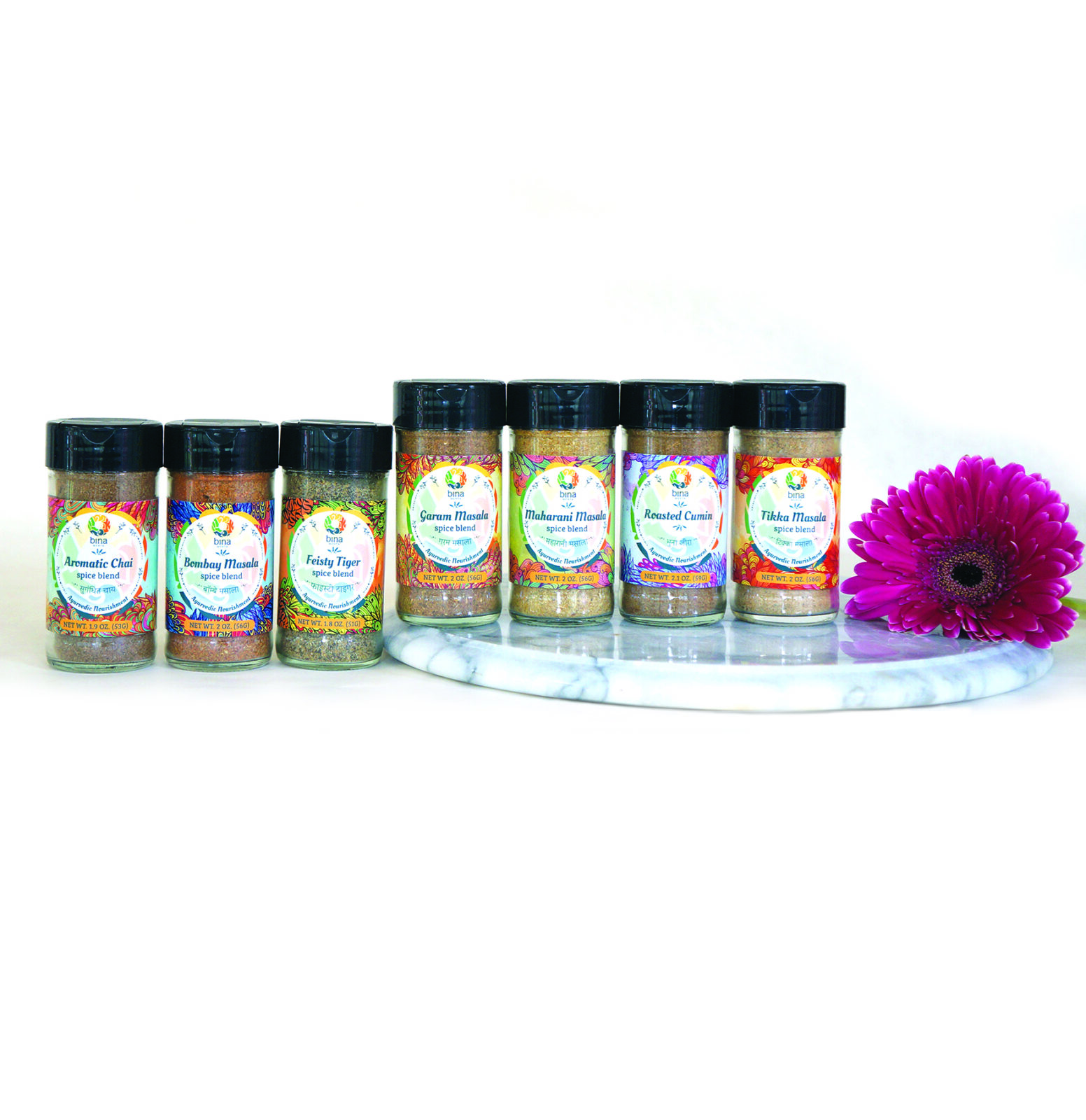
• Aromatic Chai → grounding, calming, vata-soothing. My Aromatic Chai blend contains cinnamon, black pepper, cardamom, ginger, cloves, saffron, nutmeg, and mace.
• Bombay Masala → balanced daily use, tridoshic support. My Bombay Masala blend contains amchur, coriander, Kashmiri chili peppers, Hungarian paprika, Bina Mehta’s Garam Masala (for color), black pepper, black salt, Himalayan salt, ajwain, Bina Mehta’s Roasted Cumin, ginger, Reshampatti chili peppers.
• Feisty Tiger → use sparingly for strong kapha or sluggish digestion. My Feisty Tiger blend contains onion or kalonji, Bina Mehta’s Roasted Cumin, fennel, fenugreek, and black mustard.
• Garam Masala → aromatic finish, calming, digestive warmth. My Garam Masala blend contains coriander, black pepper, cardamom, Bina Mehta’s Roasted Cumin, mace (javintri), nutmeg, ginger, cloves, Jamaican allspice, Saigon cinnamon.
• Maharani Masala → nourishing, stabilizing, heart-centered. My Maharani Masala blend contains fennel, ginger, coriander, Reshampatti chili peppers, Kashmiri chili peppers, amchur, ajwain, turmeric powder, black sea salt, and curry leaves.
• Roasted Cumin → digestive clarity, kapha-awakening. My Roasted Cumin blend contains cumin.
• Tikka Masala → warming, stimulating, kapha-clearing. My Tikka Masala blend contains garlic, ginger, onion, cumin, coriander, cardamom, allspice, Kashmiri chili peppers, paprika, black pepper, nigella, Kasoori methi, saffron, cilantro, spearmint, and lemon peel.
Click here for a variety of recipes that use my spice blends for quick, nourishing meals!
Late winter (shishir): mid-January to mid-March (cold, heavy, Kapha-dominant).Spring (vasant): mid-March to mid-May (cool, fresh, Kapha-dominant transitioning to pitta).
Summer (grishma): mid-May to mid-July (hot, intense, pitta-dominant).
Monsoon (varsha): mid-July to mid-September (warm, moist, vata-dominant).
Autumn (sharad): mid-September to mid-November (warm, dry, pitta-dominant).
Early winter (hemant): mid-November to mid-January (cold, grounding, vata-dominant).
Season Dosha & Gunas: Foods That Balance
Spring Kapha rising/lightening (warm & dry) Ginger, turmeric, bitter greens, light grains
Summer Vata dryness + heat Cool fruits, cilantro, mint, quinoa
Autumn Vata high (dry, light) Root veggies, warming grains, ghee
Winter Vata cold, slow Warm soups, hearty grains, spices
Simple Recipes
• Golden Milk—warm spiced milk with turmeric and cardamom or saffron and cardamom.
• Turmeric-Spiced Vegetable Stew—warming and moisture-rich stew with vegetables and spices such as salt, turmeric, coriander, cumin, fenugreek, mustard, and hing and fresh herbs such as cilantro, mint, and curry leaves.
• Sesame & Date Porridge—sesame, dates, cinnamon, and cardamom in a sweet, warm, immunity-supporting porridge.
Practices: Gentle yoga, wind down earlier in the evening (such as around 6:00 pm), cozy meals, sip warm drinks such as Golden Milk spiced with turmeric, cardamom, or saffron.