

Jun
Ayurveda offers an energetic view of our existence, recognizing that harmony exists at all levels: unity underneath the diversity we experience. We are in relationship with everything and everyone around us. There is order of life on Earth related to natural flows, natural laws, and the natural universe. Here are some fundamental Ayurvedic principles that will bring balance in the body with the transition of the seasons from spring (kapha) to summer (pitta).

Kapha to Pitta Transition
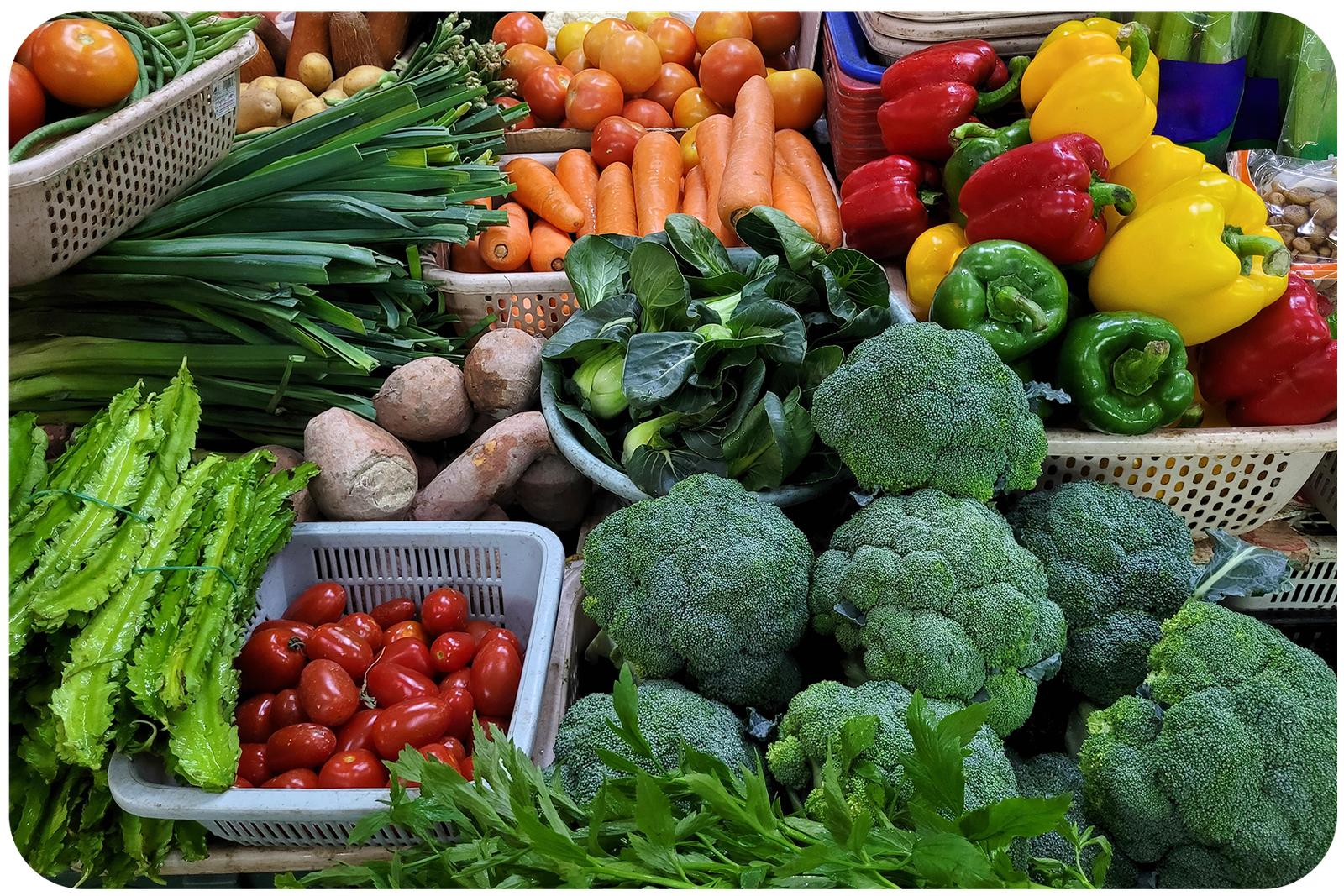
The coolness and wetness of spring (kapha) is slowly moving into the heat and dryness of summer (pitta). Everything is blooming, and the vegetables are available in abundance.
As this transition occurs, our body too is shifting with the change in seasons, which means our microbiome is shifting, and we need to shift our diet to align with nature’s bounty. In essence, nature’s wisdom is conveying its intelligence around us all the time. To align our bodies gently, we must listen to the gentle whisperings of nature and observe the amazing seasonal changes occurring minute by minute and day by day.
Circadian Rhythm
Our circadian rhythm is extremely important, and we should be aware of certain times of the day when certain activities of our lives can be optimized. The circadian rhythm is the body’s innate 24-hour biological clock—a rhythmic intelligence that governs:
• digestion
• hormone secretion
• sleep and wake cycles
• cellular repair

In Ayurveda, this aligns closely with doshic cycles of the day.
From 6:00 am to 10:00 am is kapha time. We need to take things slowly as we wake up.
- Slow, heavy, steady
- Agni is gentle → best for light, warm nourishment
From 10:00 am to 2:00 pm is pitta time. This is when we are active and doing our workouts and when we should eat the biggest meal of the day (around noon). We should eat like a king at this time.
- Strong, sharp, penetrating
- Agni is at its peak → main meal should be here
From 2:00 pm to 6:00 pm is vata time. This is when we should focus on mental activities, such as paying bills or doing creative projects.
- Light, mobile, subtle
- Agni begins to decline → lighter meals, easier to digest

From 6:00 pm to 10:00 pm is kapha time again. This is when we start slowing down to get ready for bed. It is a restful time. Our meals during this time should be minimal and light, like a pauper.
From 10:00 pm to 2:00 am is pitta time. This is when we will be resting or sleeping because at this time, all the nutrition that we have acquired during the day is being metabolized, assimilated, and distributed to our body’s tissues. This time is sacred because the body needs time to repair itself and deliver nutrients to all parts of the body.
- Body shifts toward repair and internal processing
- Late eating burdens Agni → leads to Ama formation
From 2:00 am to 6:00 am is REM time, when we get the most restful sleep and are having dreams.
Circadian alignment is not rigid—it is harmonizing with nature’s intelligence.
Five Elements and Three Doshas
The five elements, according to Ayurveda, are earth, water, fire, air, and ether (or space). These elements make up everything that exists or has existed in the universe. We are, of course, made of these elements.
In addition, there are three life energies called doshas. Your dosha is your unique body constitution, which is a blend of the five elements, with two elements being predominant. The combination of these elements determines your dosha type at the moment of conception (your prakriti, which is your particular matrix). The dosha types are vata, pitta, and kapha. Vata is composed of air and ether, pitta is fire and water, and kapha is air and water. Being aware of your prakriti, which is unique only to you, is important. Visit Banyan Botanicals to take a quiz that will help you determine your dosha type at the basic level.
During every seasonal transition, imbalances occur (vikriti), and during these times, we are trying to bring back balance through lifestyle choices, including what we eat and drink. The heaviness that accumulates from kapha starts to liquefy in spring, and then in summer, we gravitate toward eating cooler foods, such as melons, grapes, apples, and other juicy fruits to keep ourselves hydrated. Leafy greens are also an excellent choice at this time because they have a “scraping action” to remove mucus from the body.
To reduce the heaviness of kapha, Ayurveda recommends the following tastes: pungent, bitter, and astringent. For balancing pitta, the tastes are sweet, bitter, and astringent. Kapha and pitta have two tastes in common: bitter and astringent.
The pungent taste stimulates digestion and circulation. Some pungent spices include black pepper, garlic, onions, and horseradish.
The bitter taste triggers saliva and digestive enzymes, assisting in nutrient absorption and reducing bloating. The bitter taste also supports the liver.
Astringent is drying and cleansing. Some astringent spices are coriander, fresh fennel, rosemary, nutmeg, basil, caraway, cumin, and saffron, and foods such as arugula, unripe bananas, pomegranate, apples, cranberries, and others.
The sweet taste is cooling and soothing, counteracting hotness and sharpness to provide balance for pitta. Sweet tastes include honey, juicy fruits, dairy in small amounts, nuts, grains, and root vegetables such as sweet potatoes, carrots, and beets.
Agni, Ama, and Prajna Paraada: A Profound Triad
There is a profound and beautiful triad within Ayurveda: agni, ama, prajna paraada, each one a thread, but together, they weave the story of health, imbalance, and ultimately, self-awareness.
Agni: The Fire of Transformation
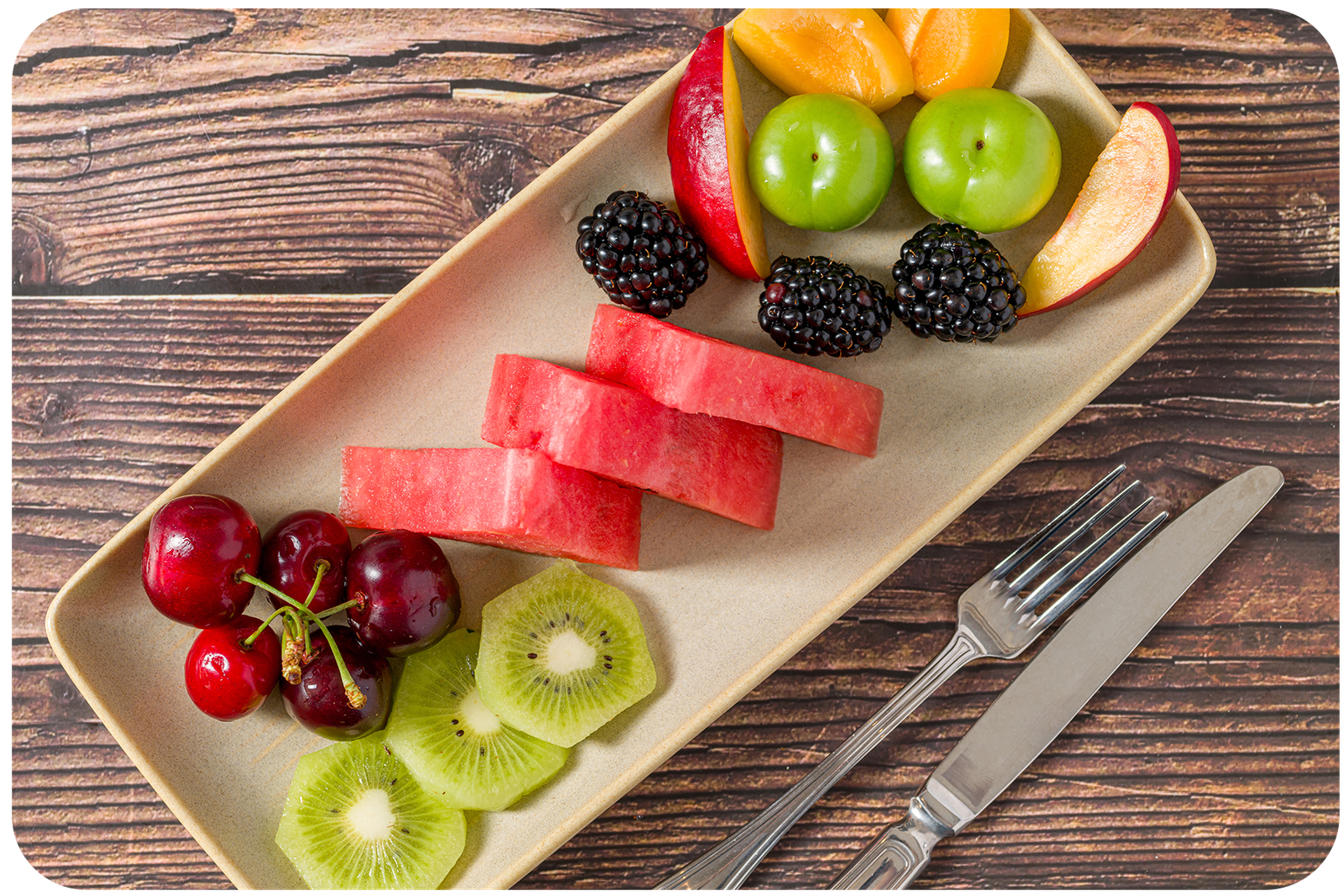
In the summer, the sun is hot. The qualities of pitta are raging. When we think of pitta (which are the qualities of fire and water), we think of agni. During the summer season, consuming too many spicy foods will aggravate pitta. It’s best to balance with cooling, watery foods, such as melons, berries, etc.
Agni is central to all healing in Ayurveda. It governs digestion, metabolism, clarity, and discernment. But it is not just digestion of food; it is also digestion of experience and emotions. Agni is required for intense focus, such as meditation or other activities that require such attention. When agni is balanced, food is transformed into nourishment, thoughts are clear, and tissues are vibrant. This brings vitality, health, radiance, courage, and intelligence. It is the root of life.
When agni is disturbed or unbalanced, digestion weakens or becomes erratic, clarity dulls, resilience fades, and dis-ease and discomfort sets in. This manifests as heat, inflammation, irritability, anger, and excess sharpness in body and mind.
Agni responds directly to how we live: our rhythms, our awareness, our lifestyle choices, our thoughts, our emotions, our actions, our intentions—everything, including physical, emotional, and spiritual well-being.
To understand agni further, there are four types of agni: too slow (manda agni), too sharp or too hot (tikshana agni), vishama agni (inconsistent: neither too sharp or too hot or too slow), and just right (sama agni).

Inner and Outer Agni—The Mirror of Fire
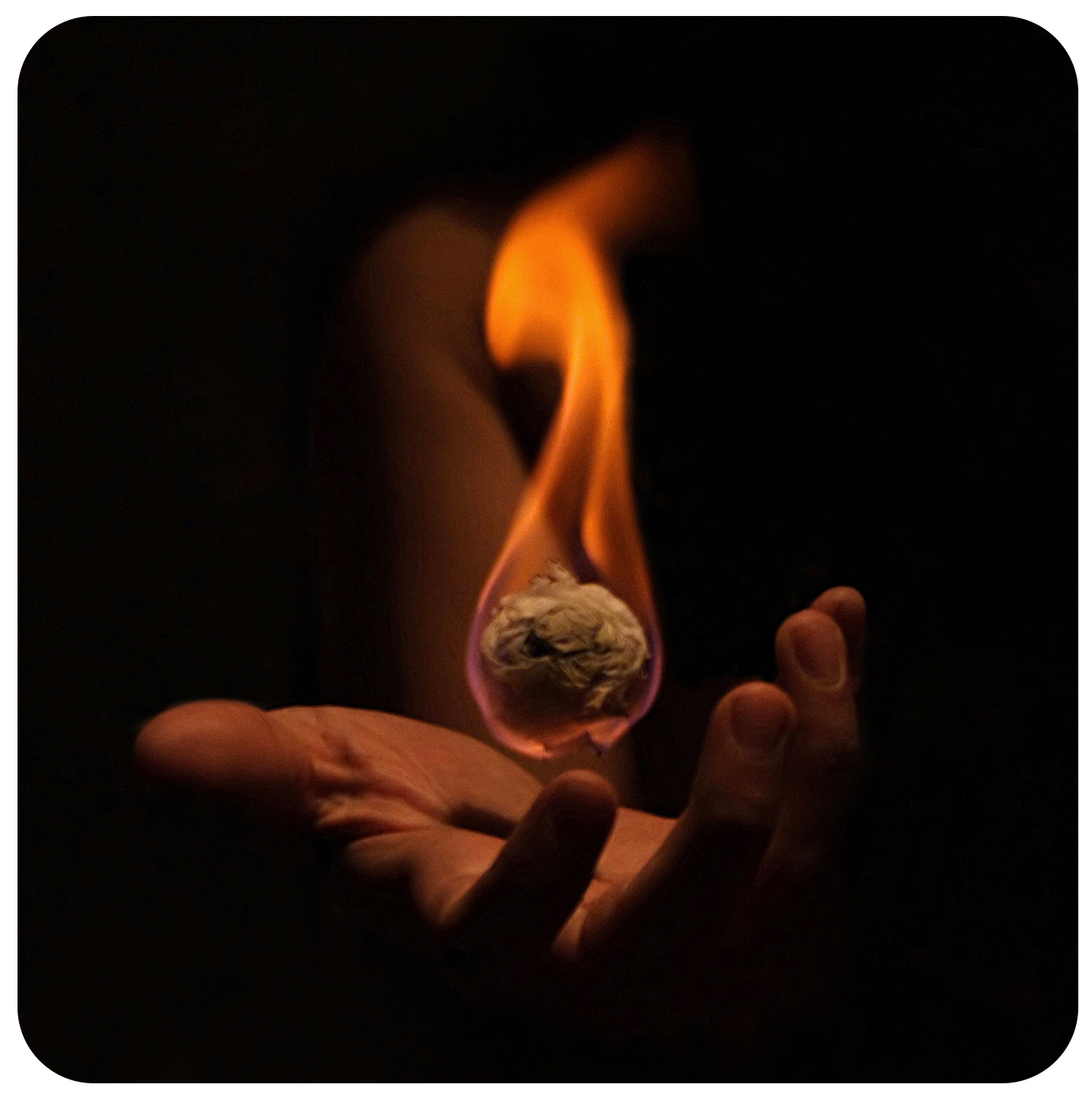
There is also inner and outer agni. Outer is the kitchen where we cook our food and the fireplace. The inner fire is our digestion. Hydrochloric acid in our stomachs helps us break down protein and kill bacteria. Agni is both visible and invisible, yet always relational.
Outer Agni—The Fire We Tend
The outer fire lives in:
- the kitchen where we prepare food
- the flame that transforms raw into nourishing
- the hearth—source of warmth, comfort, and gathering
This fire teaches us:
- timing (too much heat burns, too little leaves food raw)
- attention (fire requires tending: more awareness and perception)
- transformation (what is hard becomes digestible and more refined)
Inner Agni — The Fire Within the Body
This same intelligence lives within us.
- Gastric secretions—especially hydrochloric acid—begin the breakdown of protein
- It acts as a protector, neutralizing harmful microbes
- Digestive enzymes continue this alchemy through the gut
But Ayurveda expands this beyond chemistry:
Inner Agni is:
- metabolic intelligence
- cellular transformation
- the ability to convert food into ojas (vital essence)
When inner and outer agni are aligned—what we cook, how we eat, and how we live—
digestion becomes effortless and deeply nourishing.
Mental Agni and “Etheric Residue”
Mental agni: etheric garbage (undigested emotional waste that give us a repeated narrative that causes pain).

Mental Agni — The Fire of Perception and Processing
There is also a more subtle fire—the one that digests thought, emotion, and experience.
Mental agni is the capacity to process emotional experiences, integrate memory without distortion, and release what no longer serves. When this fire is strong, perception is clear, emotions move and resolve, and thoughts are not repetitive or heavy.
When it is weak or obstructed undigested emotions accumulate → this is a subtle form of ama where narratives repeat. We relive, like a broken record, rather than release. This is not just psychological—it is energetic, physiological, and spiritual. Etheric residue is the accumulation of undigested emotional experience that continues to circulate as repetitive inner narrative, often carrying the imprint of pain. This connects directly to prajna paraadha—because when we override truth repeatedly, the mind cannot fully metabolize experience.
Why This Matters
When we eat:
- against rhythm → agni is confused
- too late or irregularly → digestion weakens
- without awareness → accumulation and stagnation begins
Ama: The Stagnation of Toxins
Ama causes toxins that arise from weakened or erratic agnis. Ama is not only a physical toxin, it is undigested food, unprocessed emotions, and unresolved experiences. It carries qualities of heaviness, stickiness, dullness, and obstruction. You may recognize this as fatigue that lingers, a coated tongue, mental fog, and emotional stagnation. Ama is the body’s language that says something has not been fully received, transformed, released, or eliminated. Ama is the residue of what was not fully metabolized—the accumulation of what the body and mind could not process or digest.
When the agni is too slow (manda), the food ingested will be stagnant in the stomach and rot, which causes ama because our lymphatic system becomes congested, and all our flows don’t function as they should. When the agni is too sharp or too hot (tikshana), it “overcooks” the food we consume, even if it is healthy food, and our bodies will not able to assimilate and use it as nutrition. When the agni is inconsistent (vishama), it results in bloating, constipation, distention, gassiness, etc.
Prajna Paraada: The Forgetting and Ignoring of Inner Wisdom
When we move away from inner knowing, and the fire of transformation weakens because of the disturbance of agni, what is not digested accumulates and stagnates, causing ama to form. Prajna means wisdom or intellect, and paraada means war against, so translated, prajna paraada means “crimes against wisdom.” Ignorance is not bliss. It is our responsibility, dedication, devotion, and discipline to maintain a balanced dosha. It is not simply a lapse in thinking; it is forgetting or ignoring inner wisdom and intelligence, which we all possess. It is when we know, yet we do not act. We feel, yet override. We sense disharmony, discontent, and discomfort, yet we continue.

This is not harshly judged; it is deeply human. It may look like eating against the rhythm of the season, pushing through fatigue instead of resting, choosing stimulation over stillness. This where the sacred dialogue between mind and body becomes interrupted. And from here, the journey of imbalance quietly begins. Ayurveda understands that sometimes we knowingly and unknowingly go against everything that our body is able to handle. With awareness, we bring the balance back again and again. Health is not a destination; it is a constant awareness of all the changes going on within us, around us, and beyond us.
The Path Back: A Gentle Reorientation

Healing is not forceful; it is remembering. The point is, we restore awareness by softening prajna paraada, then we tend to the fire and strengthen or moderate our agni according to our dosha type, and lastly, we lighten the load by reducing the ama. This may look like eating with the rhythm of the day, choosing warm simplicity and presence, honoring hunger, rest, and emotional truth. In our daily life, this is where the art of tending to our inner fire requires awareness and diligence.
The Indian Kitchen Pharmacy

Everything is always changing. This affirms the cycles and rhythms of the universe. There are seasons, the ebb and flow of the tides, the process of birth to death, and the moon cycles.
Each living being is made in the eyes of the divine with the belief that each has the potency or seed to succeed and grow. The small seed embraces wholeness and has the potential to become a tree. This concept makes up the totality of all living beings.
Indian food is infused and inundated with spices in various combinations, and when eaten represents the growth of your inner seeds and potential for living. The word curry is merely a combination of several spices in a dish. These spices heal and nourish and have natural medicinal properties when used on a regular basis. It helps your body get rid of toxins and parasites by keeping your digestive system and metabolism working efficiently.
Healing ourselves is as simple as opening our kitchen cabinet. We can take advantage of this resource by using powerful and potent herbs, spices, and superfoods within our own home. The kitchen can become your own clinic. You can use your kitchen and its resources to create herbal cures that will heal your family and yourself.
The body is never working against us.
It is always speaking—through sensation, through rhythm, through subtle shifts.
When we listen, prajna paraada dissolves.
When we honor the flame, agni steadies.
When we lighten with awareness, ama releases.
And in that space,
balance is not something we achieve—
it is something we return to and remember and embrace.
Green Pecan Chutney
3 large bunches cilantro leaves
1 lime, juiced (2 tablespoons)
2–3 serrano chilies
1 teaspoon cumin seeds
1 tablespoon salt
1/4 teaspoon sugar
1 cup water
1 cup pecans
Pinch of baking soda
Add all the ingredients to a blender or food processor, and grind to a smooth paste.
Serve with an assortment of raw vegetables or pasta.
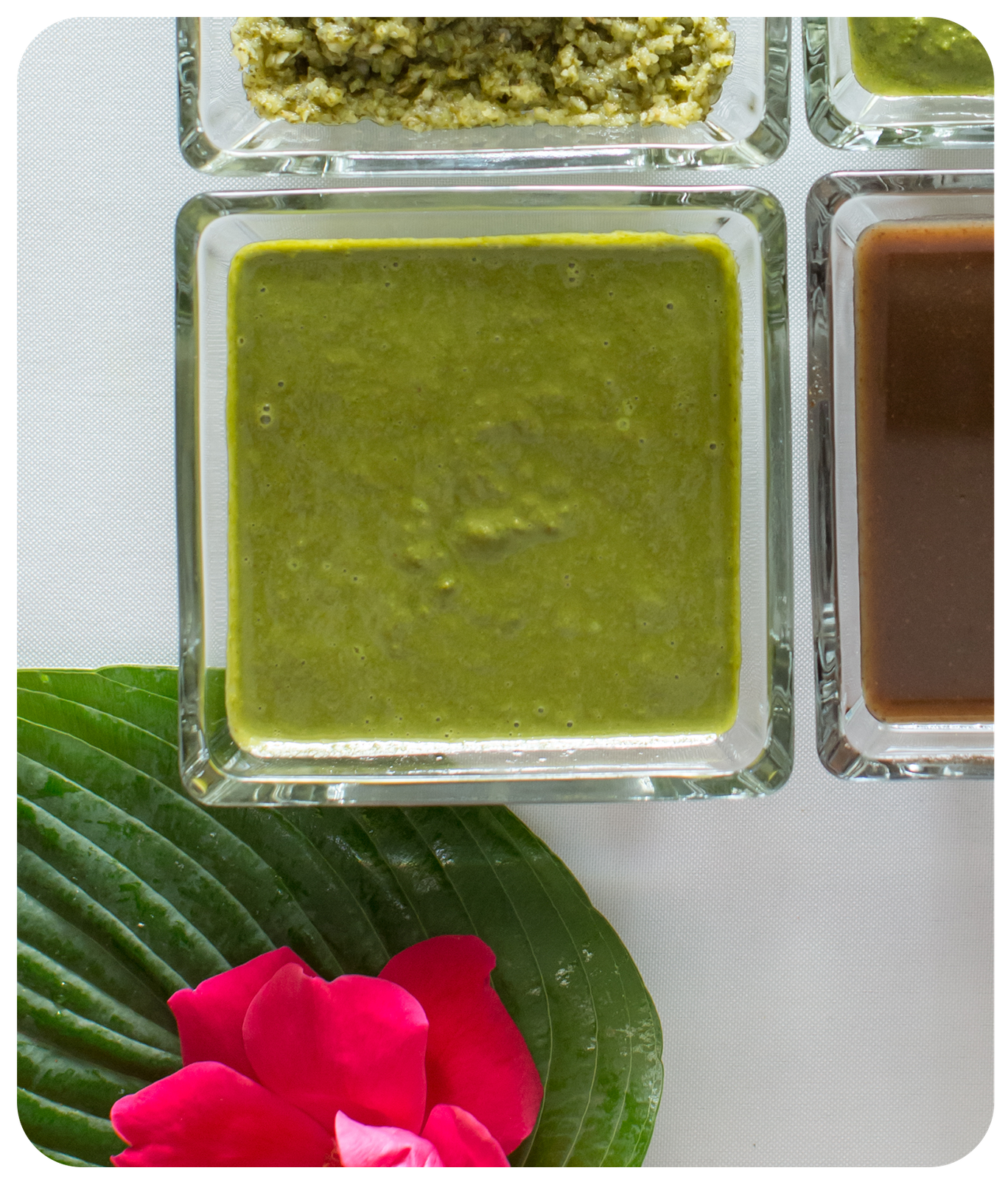
Green Cilantro Chutney
2 bunches cilantro leaves
1/2 cup pecans or walnuts
1–3 serrano chilies*
1 teaspoon cumin seeds
2 tablespoons lime juice
3/4 tablespoon salt
1/4 cup fresh coconut (optional)
1/2 cup water (divided)
In a blender, place the cilantro, nuts, serrano chilies, cumin seeds, lime juice, salt, and coconut (if desired) with 1/4 cup of the water. Blend until smooth, add just enough of the remaining water to form a thick paste. Add a bit more water if needed.
*Note: The number of serrano chilies used will adjust the heat to taste.

Shrimp Cocktails
Cooked shrimp, thawed, peeled, and deveined
Ground cumin sprinkled on top of the shrimp
Serve the chutneys with chilled shrimp cocktails and a tray of raw vegetables for dipping. If you prefer chicken instead of shrimp, the chutneys go over grilled, stir-fried, or baked chicken.