

Oct
Aalaap is the disciplined journey of receiving sound, embodying it, and returning it—not as imitation, but as living transmission.
Listening before singing
Aalaap begins before the first audible note. It begins in the musician’s capacity to become quiet enough to perceive: the resting breath, the living drone, the acoustics of the room, and the inward readiness from which tone may arise. Deep listening is therefore not passive. It is a finely gathered attention—receptive, discerning, and awake.
The listener learns to hear more than pitch. One attends to the silence that births a note, the texture of its arrival, the way it blooms in the body, and the resonance that remains after the voice releases it. Between one note and the next lies an invisible continuity. Aalaap trains the ear to follow that thread.
| THE CENTRAL MOVEMENT Receive the sound. Let it travel through breath and body. Return it with attention, memory, and presence. |
The raga as a living field
Rooted here in the tradition of Dhrupad, which began in the 15th century of King Akbar, Aalaap draws upon the sacred syllables, the architecture of raga, and the cultivation of an attentive mind. It is neither a fixed composition nor random improvisation. It is an unfolding governed by the grammar of the raga, its movement, mode, temperament and subtle laws. Without meter, rhythm, or lyrics, aalaap is held by an inner pulse that precedes rhythm itself. Its characteristic tones, pathways of ascent and descent, points of repose, gestures, tensions, and emotional atmosphere are part of this deep-listening journeying.
This is a transmission from the transpersonal to the personal. The musician becomes less a performer and more a vessel that receives these syllables through deep listening, tone, and resonance that travel beyond the intellect into the body, awakening a field of awareness that cannot be forced and only received. Freedom does not oppose form; freedom becomes meaningful because the form is deeply known.
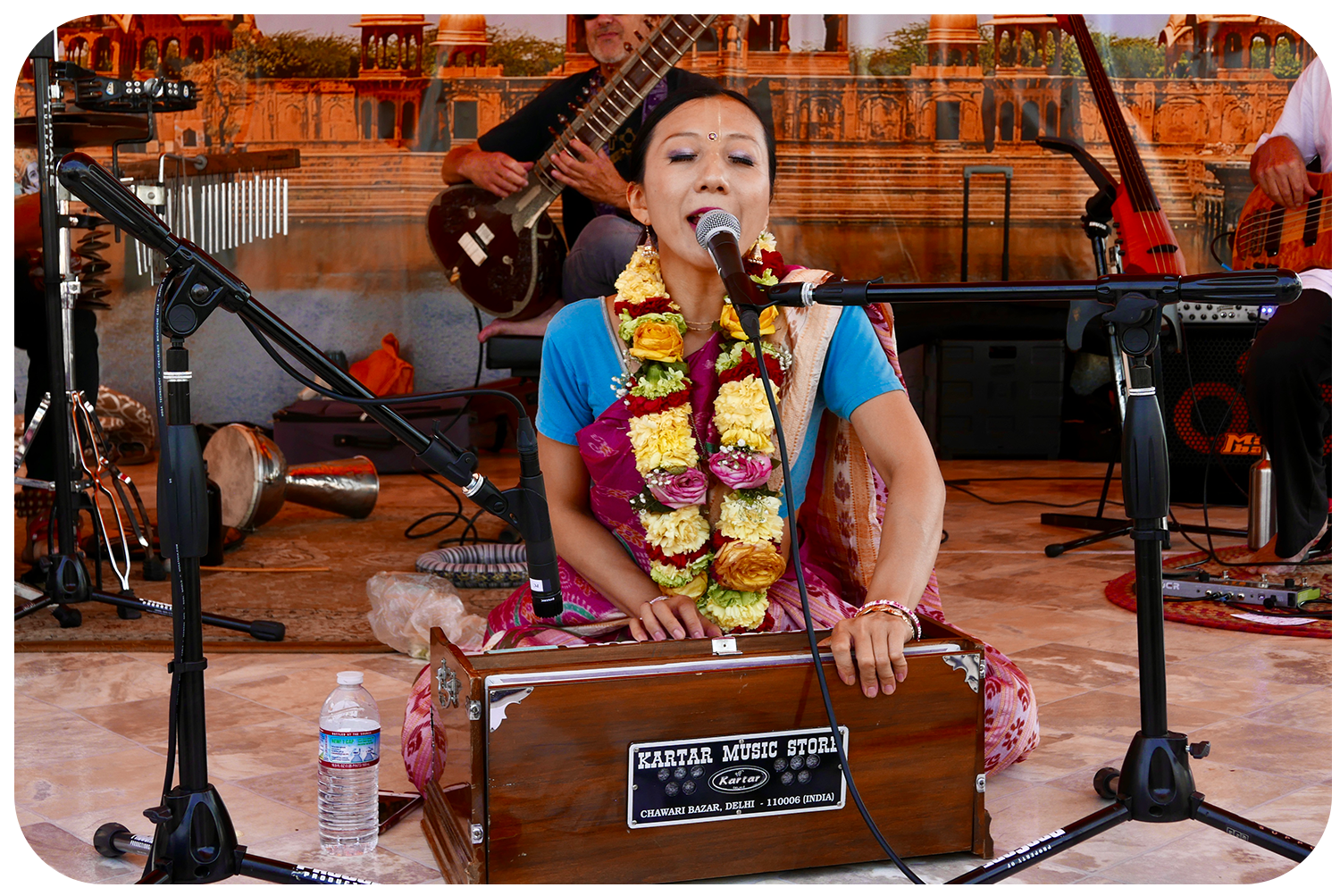
As the voice lingers within in each note and spirals gently through its microtonal landscape, the nervous system softens. The breath lengthens. Attention becomes more focused. The body gently releases its habitual fragmentation. In this state of sustained listening, we move from doing toward being, from reaction toward receptivity. The resonance of the voice becomes an internal massage, inviting coherence between breath, heart, mind, and vibration. This coherence is not confined to the singer alone; a deeply attuned voice extends into the surrounding space like a tuning fork sending ripples of resonance which attune other listeners’ nervous systems to calm, presence, and regulation.
The earthly entanglements of thought, identity, and urgency begin to loosen. They are not rejected but gently dissolved through the spiraling movement of sound. Each phrase of the syllables circles inward and outward simultaneously, much like the unfolding of a galaxy or the unfurling of a fern. This spiral is not repetition but evolution—a return that is always new. In following these living currents, consciousness is generally transported beyond the ordinary perception of time and space into a state of expanded awareness.
Beyond time and space, sound returns us to the primordial pulse from which all music and perhaps all life emerges. Aalaap therefore is not simply the introduction to raga nor is it merely a scale. It is the gradual unveiling of its essence. Its identity is carried by relationship—how a tone is approached, how long it is inhabited, which inflections awaken its character, and how phrases gather memory across time.
An inner pulse before meter
In aalaap, one does not seek to fill silence. One learns to hear from within. In its unmetered beginning, aalaap is not governed by a repeating rhythmic cycle. Yet it is never without movement. Breath creates proportion; attention creates pacing; the return to the tonal center creates orientation. An inner pulse is already present—more elemental than measured rhythm, but capable of becoming increasingly energized as the exposition develops.
In the ancient Dhrupad practice, the voice may use open vowels and traditional Dhrupad syllables as carriers of tone. These syllables do not function as narrative lyrics. They free the voice to shape resonance, articulation, and melodic movement while remaining devoted to the raga’s unfolding. Terminology and sequencing vary across lineages, but the underlying discipline remains one of gradual revelation.
The body becomes the instrument
Tone is not produced by the throat alone. It is organized by the whole body: the steadiness of posture, the responsiveness of the ribs, the release of the jaw, the buoyancy of the soft palate, and the unobstructed movement of breath through a relaxed diaphram. When effort is excessive during singing, the sound hardens. When support collapses, it loses vitality. Practice seeks a third condition—grounded yet unforced.
A sustained note becomes a site of investigation. The singer listens from within the tone, noticing how breath pressure, vowel shape, resonance, and intention alter its life. Microtonal movement is approached as a continuum rather than a staircase. A note may be circled, leaned into, shaded, or allowed to settle until its precise emotional weight becomes audible.
| EMBODIED ATTENTION The aim is not to hold the note still, but to remain present enough to hear its inner movement. |
Breath, attention, and regulation
As attention settles into sustained tone, the breath often becomes slower and more continuous. We feel our muscles relax. The mind, given a single subtle object of attention, can become less scattered. These effects should not be treated as guaranteed therapy or forced through will; they are natural possibilities that emerge when vocal practice is patient, comfortable, and well guided.
The resonance of the voice is felt as well as heard. Vibration travels through the chest, face, skull, and surrounding air. This sensory feedback gathers attention into the present moment. What was fragmented begins to organize around breath, tone, body, mind, and spirit.
Transmission: from personal to transpersonal
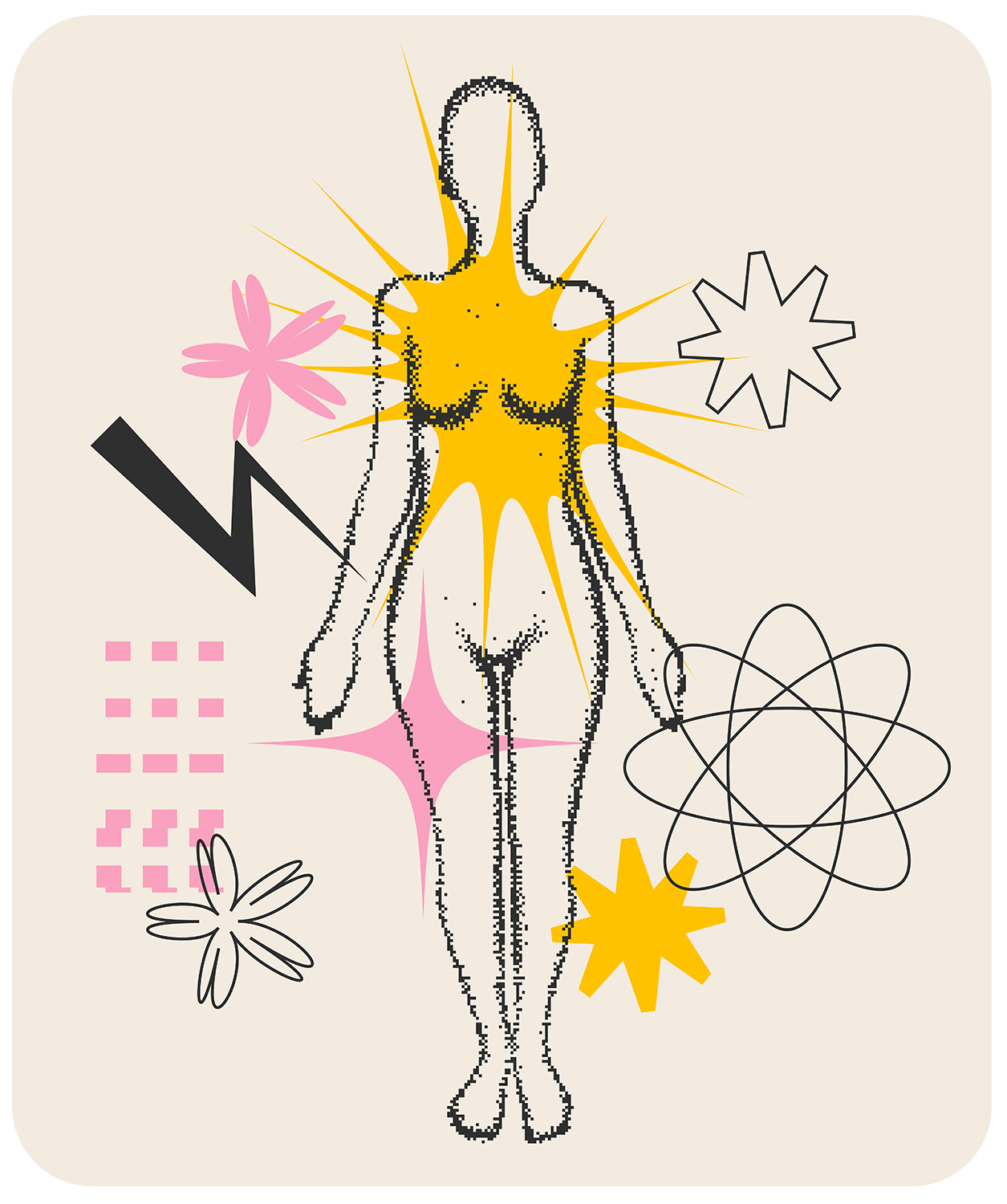
Aalaap may feel intensely personal, yet its deepest movement is not self-display. The musician becomes less a performer than a vessel through which a musical intelligence can become audible. Training provides the language; surrender allows the language to live. Individual temperament remains (on hold), but it serves something larger than personality.
This is transmission from the transpersonal to the personal and back again. The raga is received through lineage, listening, and practice. It is embodied in a particular voice at a particular moment. It is then offered into shared space, where another listener may receive it according to their own inner capacity.
A deeply attuned voice can alter the quality of a room. The effect is not control but resonance: an atmosphere in which breath may ease, attention may gather, and silence may become perceptible as a presence rather than an absence.
The spiral of return

Aalaap often advances by returning to a familiar refrain. A phrase revisits a tone but never from exactly the same place. Each return carries the memory of what has already sounded. The movement is spiral rather than circular: inward and outward at once, like the unfurling of a fern or the turning of a galaxy as mentioned before.
In following these living currents, ordinary time can loosen. Minutes are no longer counted primarily as duration; they are experienced as degrees of ripening. The next phrase arrives not because the clock demands it, but because the previous sound has completed its work.
Art as cultivation
Art, in this sense, is not merely expression. It is cultivation through practice: disciplined repetition, sustained attention, refined feeling, and the humility to hear what is not yet fully formed. These are not separate qualities but one continuous path toward attunement.
Through long devotional practice, the artist becomes capable of perceiving finer distinctions between force and intensity of resonance, ornament and necessity, emotional projection and genuine rasa, silence that is empty and silence that is alive.
A simple contemplative practice
This sequence is not a substitute for training and learning technique with a knowledgeable teacher. It is a gentle way to cultivate the listening from which aalaap grows:
- Arrive. Sit with an upright but unforced spine. Notice your surroundings.
- Receive. Listen to a steady drone or remembered tonal center. Let the ear settle before the voice enters.
- Breathe. Allow the exhalation to lengthen naturally. Do not strain or manufacture calm.
- Sound. Offer one comfortable tone on an open vowel. Keep the volume modest and listen through its full duration.
- Follow. Move toward a neighboring tone slowly, attending to the pathway rather than only the destination.
- Return. Come back to the tonal center and hear how it has changed through the journey.
- Release. Let the final resonance disappear completely. Remain for several breaths in the silence that follows, like shavasana in yoga.

The unveiling
Aalaap is more than the introduction to a raga. It is the gradual unveiling of the raga’s essence. Note by note and syllable by syllable, it reveals an inner architecture, an emotional landscape, and a living intelligence. It creates an atmosphere in which sound becomes prayer, listening becomes meditation, and resonance becomes a bridge between inner and outer worlds.
One does not seek to fill silence; one learns to hear from within it. Beyond ordinary time and space, sound returns us to the primordial pulse from which music—and perhaps all life—continually emerges.
| CLOSING REFLECTION What remains when the note is gone? Aalaap begins again in that listening. |