

Aug
Hello, darkness, my old friend.
From the darkness comes the light.
From the stillness comes movement and sound.
From light, movement, and sound comes our universe.
Stillness is the quiet center beneath the movement of life. Stillness is not the absence of life; it is a space where life reveals itself. Stillness is sacred. We associate stillness with silence. But stillness is not the absence of sound; it is the presence of sound inaudible to human hearing.
Sound is vibration, movement, expression, and manifestation. Silence is the ground from which all vibration emerges and to which it eventually returns. Just as waves arise in the ocean and dissolve back into it, all sound emerges from silence and returns to silence.

Sound and silence exist in a sacred relationship. One gives birth to another, and together, they form the rhythm of existence itself. In many spiritual traditions, creation begins with sound, yet realization of the truth of your being is revealed in the silence.
In the Vedic tradition, the universe itself originated from primordial sound (nada). Nada is cosmic vibration. The mantra om is the original sound current, containing creation, preservation, and the dissolution within itself. Om is not merely a chant; it symbolizes vibration underlying and unifying all life. The ancient sages perceived existence itself as resonance.

Stillness is not passivity or detachment from life. It is an awakened state where mind ceases its restlessness, fluctuations, and constant noise of thoughts and emotions.
Can you sit with the silence?
Sthitha Prajna: The intelligence of stillness
Sthitha means stillness, and prajna means intelligence. Who is this kind of person who can go through life with this intelligence of stillness? What is their demeanor? The answer is found in the Bhagavad Gita.
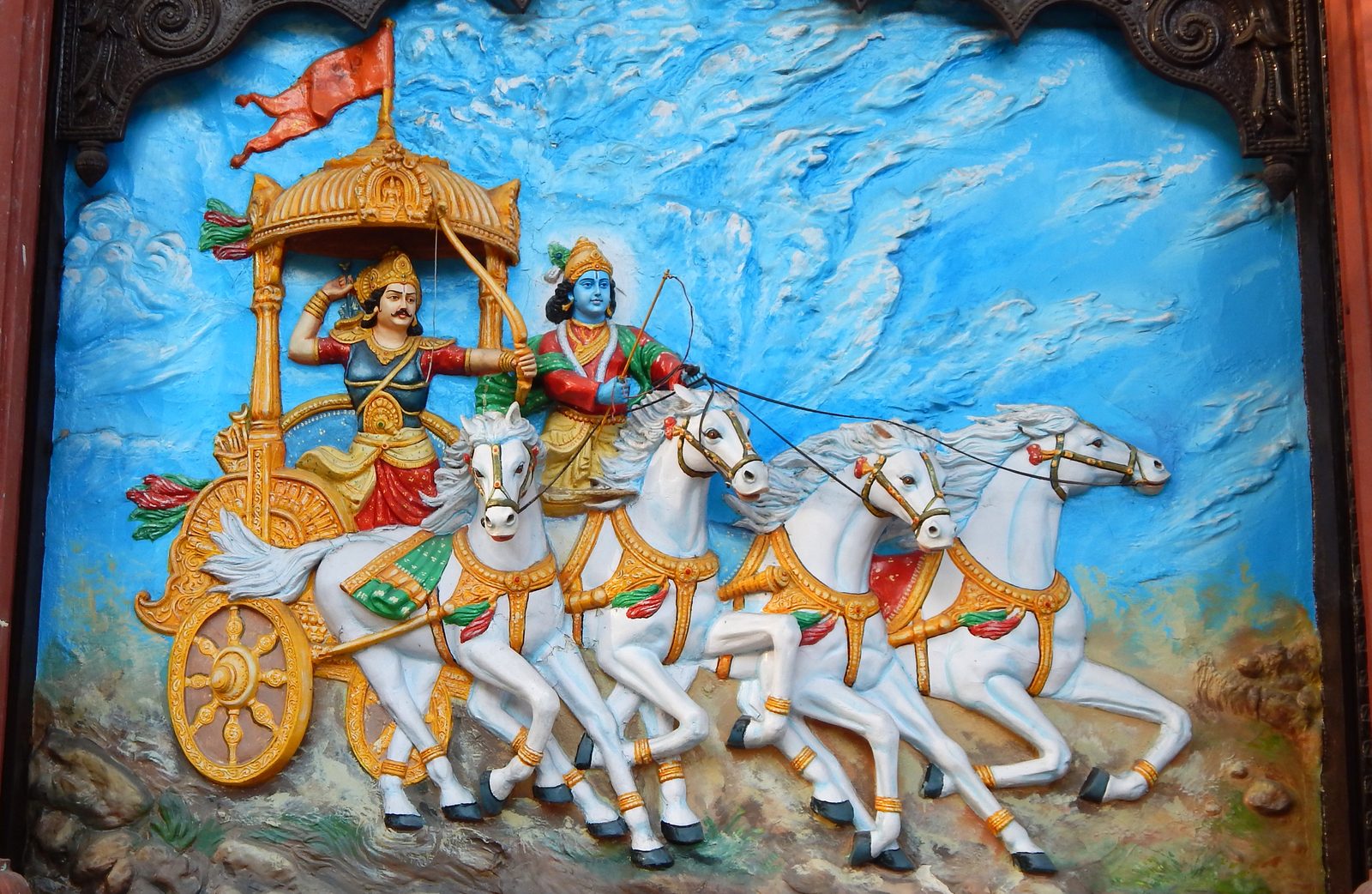
In the Gita, Arjun, who represents humans, is on a battlefield, faced with waging war against all of his friends, family members, teachers, and elders because they had not followed dharma. Arjun, in a state of confusion and despair because he was resisting fighting his loved ones, asks Lord Krishna, who represents god, a very potent question: How does a person of steady wisdom (sthitha prajna) think, speak, sit, walk, and go through life? Krishna answers thus:
A person of steady wisdom speaks thoughtfully rather than impulsively.
Their words are very measured and meaningful.
They remain calm in the midst of conflict.
They do not need constant validation.
They act with kindness and compassion.
They accept change with maturity.
They maintain and live with self-awareness.
They see sacredness in all things.
They move through life with quiet steadiness.
They are fully engaged with life and do not avoid or escape any challenge.
They radiate calmness.
Their mind is not dominated or enslaved by endless cravings.
They have no constant agitation or reactions to emotions.
They do not react to ego identification.
Arjun represents the human personality—ego, fears, desires, attachments, confusion—while Krishna represents the Higher Self, Divine Wisdom, or the voice of the soul that resides in the heart. The battlefield symbolizes the inner struggle between the lower nature and the higher nature. The Gita is the dialog between the two aspects of ourselves. The moment Arjun surrenders and listens to Krishna is when the ego yields to higher wisdom, allowing us to act with clarity, purpose, and inner stillness rather than fear and attachment.
Silence is the ultimate reality which cannot be fully described by words because words belong to the human world of limitation. Silence is the language of the soul and is divine, eternal, and limitless.

Silence of the soul is a state
when the mind stops rushing,
the inner waters become still,
restlessness softens,
fog lifts from overthinking,
and what remains is unfiltered presence,
the unity of the lower and Higher Self
when time stands still.
When I think of stillness, I think of Annie Besant’s poem, O Hidden Life, written in 1923:
O Hidden Life, vibrant in every atom;
O Hidden Light, shining in every creature;
O Hidden Love, embracing all in Oneness;
May all who feel themselves as one with Thee,
Know they are therefore one with every other.
Both Human and Divine
Are we humans having a divine experience or divine beings having a human experience? Many spiritual traditions speak of the divine dwelling within the human heart, not as something distant but as a living presence hidden within the noise of the ego and the restlessness of the mind.
Stillness allows us to hear what constant activity conceals. When the mind rests in the heart, wisdom arises effortlessly. Unresolved emotions and thoughts bubble up to the surface in the quiet moments, and in those sacred, precious moments of stillness, we attune to our higher intelligence, wisdom, and awakened awareness that we possess within our hearts. This is truth, love, clarity, discernment, and total balance in mind, body, and spirit.
Hello, darkness, my old friend
I’ve come to talk with you again
Because a vision softly creeping
Left its seeds while I was sleeping
And the vision that was planted in my brain
Still remains
Within the sound of silence